Do dental implants ever go wrong?
While dental implants are incredibly reliable and enjoy a very high success rate, complications can occasionally happen. When a dental implant becomes loose, uncomfortable, or fails to heal properly, it can be a deeply frustrating and stressful experience.
As a specialist reconstructive clinic, we want to reassure you that a failing implant doesn’t mean you cannot have a happy, healthy smile. We specialise in remedial treatments to fix these issues, protect your oral health, and restore your confidence. If you have any issues with your dental implants, please don’t suffer in silence. Contact our team today, and we will do our best to help you.
Fixing a failed or failing dental implant
Most dental implants fail for a few specific reasons, and identifying the root cause is always our first step. Sometimes an implant fails early on because the jawbone didn’t fuse perfectly with it, a process called osseointegration. Other times, issues pop up years down the line due to heavy teeth grinding (bruxism) or changes in your general health.
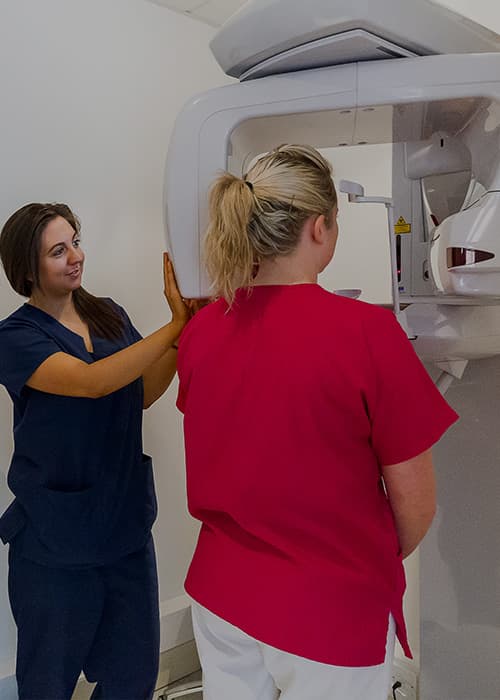
No matter how complex the issue is, our team, led by Specialist Oral Surgeon Professor Cemal Ucer, uses advanced 3D CT scanning and digital diagnostics to find out exactly what went wrong and build a safe rescue plan.
What is peri-implantitis?
Just like natural teeth can get gum disease, dental implants can suffer from a similar condition called peri-implantitis. This is a localised inflammation or infection in the gums and bone immediately surrounding your implant.
If it is left untreated, the infection can cause the supporting bone to melt away, eventually causing the implant to fail. Catching it early is the absolute key to saving your investment.
Signs to watch out for include:
- Red, swollen, or bleeding gums around the implant area
- A persistent dull ache, throbbing, or discomfort when chewing
- Pus or an unpleasant taste coming from the site
- A feeling that the replacement tooth is slightly loose or moving
Our reconstructive & rescue solutions
Because we are a premier specialist referral practice in Manchester, we frequently treat patients who had their original implants placed elsewhere, including patients seeking remedial care after dental tourism or treatment abroad.
Depending on your unique situation, our targeted treatments include:
- Advanced hygiene therapy: For early-stage inflammation, our implant-trained hygienists use gentle, specialised deep-cleaning tools to clear away harmful bacterial biofilms without scratching the implant’s surface.
- Surgical deep cleaning: If an infection has reached deeper tissues, we can perform minor, targeted surgery to thoroughly clean the hidden surface of the implant and eliminate the bacteria.
- Bone and soft tissue regeneration: If bone loss has occurred, we can use advanced bone grafting and reconstructive surgery to rebuild a solid foundation and save or replace the implant.
- Careful replacement: If an implant cannot be saved, we can safely remove it, let the area heal cleanly, and place a brand-new, stable implant, frequently utilising intravenous (IV) sedation to ensure your absolute comfort throughout.
Frequently Asked Questions
A healthy, successful dental implant should feel exactly like a natural tooth, meaning it shouldn't hurt, throb, or move at all. The most obvious warning sign of failure is any sensation of movement or looseness when you bite down or touch the tooth. Other signs include persistent pain, swelling, angry red gums, or an ongoing bad taste in your mouth. If you suspect anything is wrong, it is vital to have it assessed quickly; an early intervention can often save the implant.
Absolutely. A large portion of our practice is dedicated to helping patients who are experiencing complications from treatments completed at other clinics, including overseas dental work. We understand how stressful it is when a significant financial and emotional investment goes wrong. Our Manchester clinic is equipped with the latest 3D digital imaging and a world-class surgical team capable of identifying and treating complications across almost all major implant systems.
Yes, in the vast majority of cases, it is entirely possible to replace a failed implant. Once we safely remove the problematic implant, we focus on treating any underlying infection and rebuilding the lost bone or gum tissue using specialised grafting techniques. Once a strong, healthy foundation is restored, we can precisely plan and place a new implant to give you a long-lasting, reliable result.